Student Showcase · Texas Wesleyan University

Students Who Move, Measure & Master

In M³ courses, students don’t just learn exercise science. They do it. They design studies, collect data on real athletes in the Human Movement & Performance Laboratory, and present their findings at university and regional conferences. They also compete at the state level and bring fitness testing to the community.

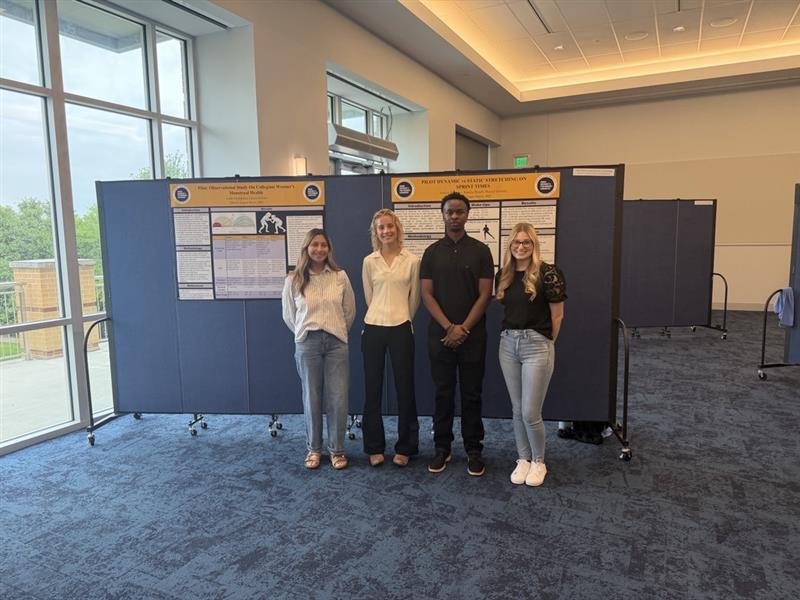
Four students standing in front of their research posters at University College Day 2026
6
Student research presentations
At University College Day and the South Central American Society of Biomechanics
26
Course-based research groups
Mentored in EXS 2304 Data Collection since 2024
2
Conference venues
University College Day (Texas Wesleyan) and SCASB (regional)
2026
TACSM Student Bowl
Texas Wesleyan team, supported by a McCann Student Development Award

TACSM Student Bowl 2026

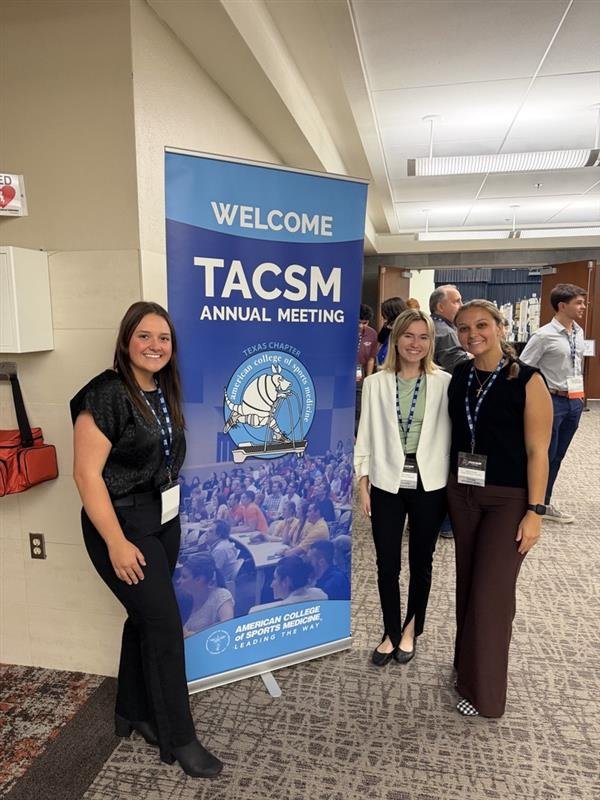
Texas Wesleyan’s team at the Texas Chapter of the American College of Sports Medicine Annual Meeting.

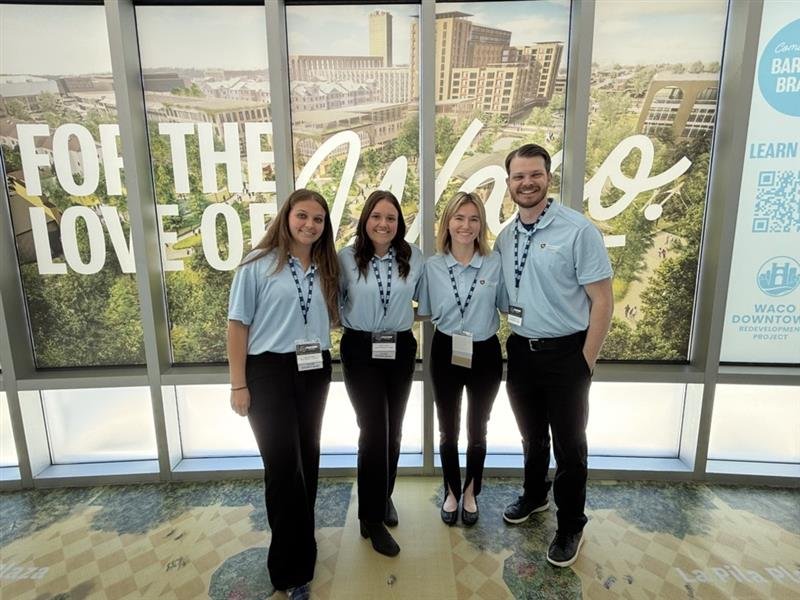
The Texas Wesleyan TACSM Student Bowl team in matching team shirts at the TACSM Annual Meeting
The 2026 Texas Wesleyan Student Bowl team
Texas Wesleyan students beside the Welcome TACSM Annual Meeting banner
Welcome to TACSM

Get ready for the next Bowl

The Student Bowl is a quiz-show competition between university teams on exercise physiology, anatomy, nutrition and clinical exercise science.

Our prep course has ten outline modules with Bowl-style rapid rounds, a playable Bowl Board capstone and a study plan, and it doubles as a head start on the ACSM-EP exam.

Enter the prep course →

Research in Every Course

Research is built into the curriculum, not saved for a few students. The presentations below started as class projects.

EXS 2304 · Data Collection

26 student research groups since 2024

Every semester, teams in EXS 2304 write a clinical question, search the literature, design a study, collect data in the lab, run the statistics in Excel and write it up. The strongest projects go on to University College Day and SCASB.

Sprint warm-upsAquatic rehabFemale athlete healthMeditation & anxietyBack-injury flexibilityKnee-injury risk
See the open textbook behind the course →
EXS 3100 & EXS 4111 · Lab courses

Real data from week one

In the Biomechanics and Exercise Physiology labs, students take turns as participant and technician. They measure force, motion, muscle activity, VO₂ and the 12-lead ECG, then analyze their own data in a lab notebook.

  • Force plates, EMG, video analysis and markerless motion capture
  • Portable metabolic analyzer, lactate and blood pressure
  • A design project that builds a biomechanics tool, app or training program
Explore the lab manuals →

Research Presentations

Pilot studies designed and run by undergraduate teams with faculty mentor Dr. Logan Moore, then presented at University College Day and the South Central American Society of Biomechanics (SCASB). Click a poster to open the full PDF.

University College Day 2026Texas Wesleyan University
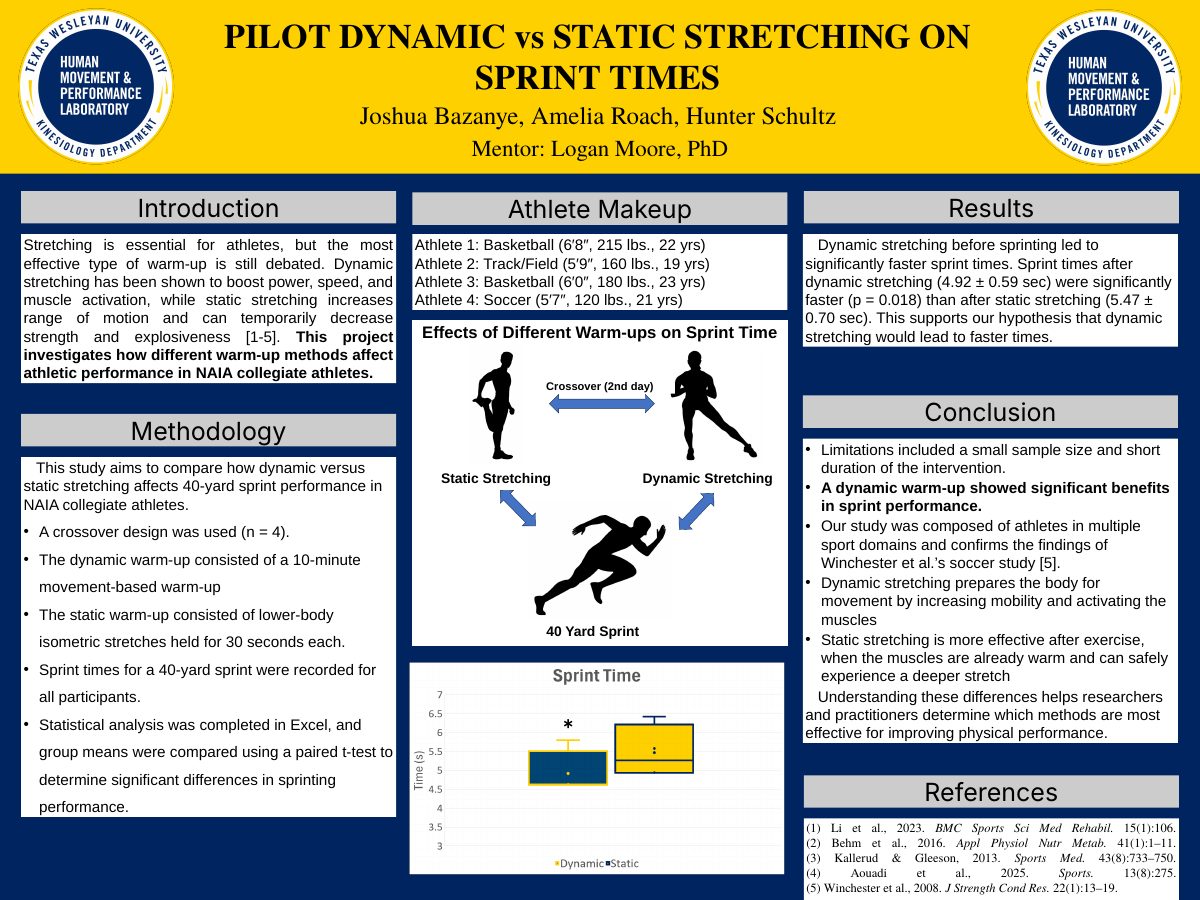
Poster: Pilot dynamic vs static stretching on sprint timesOpen PDF
Performance · Warm-up

Dynamic vs. Static Stretching on Sprint Times

Joshua Bazanye, Amelia Roach, Hunter Schultz

Finding: In a crossover study of four NAIA athletes, a dynamic warm-up produced faster 40-yard sprints than static stretching (4.92 vs. 5.47 s, p = 0.018).
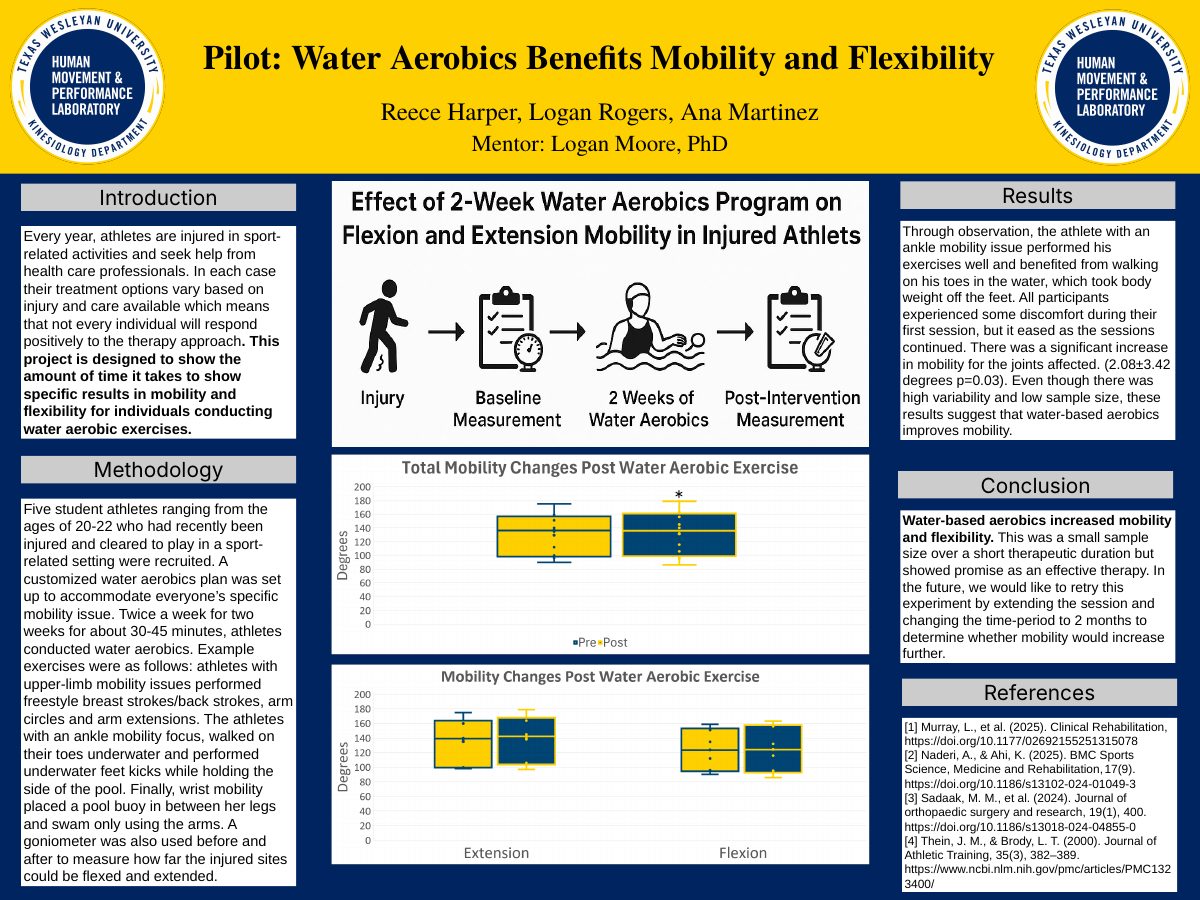
Poster: Pilot water aerobics benefits mobility and flexibilityOpen PDF
Rehabilitation · Aquatic exercise

Water Aerobics Benefits Mobility and Flexibility

Reece Harper, Logan Rogers, Ana Martinez

Finding: Two weeks of individualized water aerobics increased goniometer-measured range of motion in five recently injured athletes (+2.08°, p = 0.03).

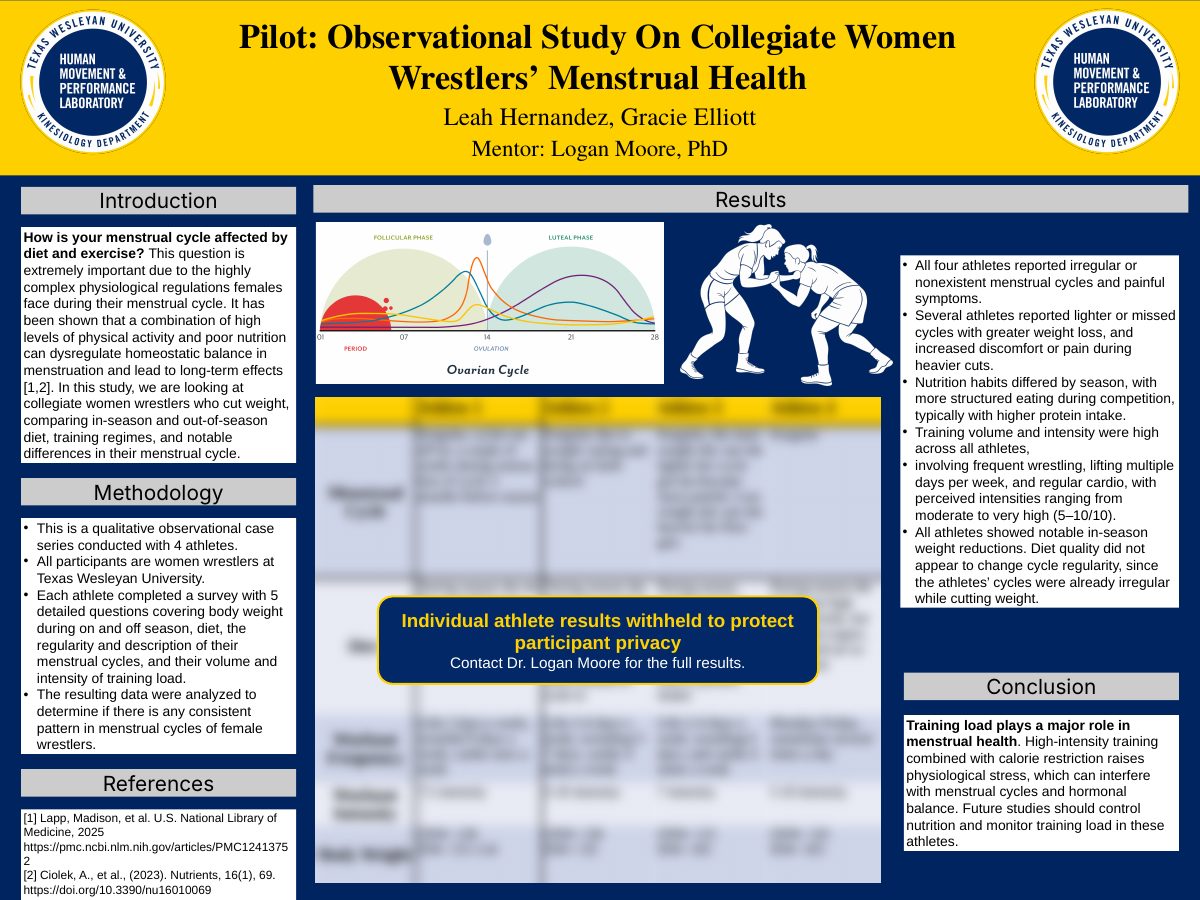
Poster: Pilot observational study on collegiate women wrestlers' menstrual health, with the individual results table blurredOpen PDF
Female athlete health · Case series

Collegiate Women Wrestlers’ Menstrual Health

Leah Hernandez, Gracie Elliott

Finding: All four athletes reported irregular cycles, with lighter or missed cycles and more pain during heavier weight cuts.

Individual athlete results are withheld to protect participant privacy. Contact Dr. Moore for the full results.

SCASB 2025South Central American Society of Biomechanics regional meeting
Regional conference posterBaseball versus Softball: A Pilot Study on Lower Extremity Injury RiskHuman Performance Laboratory · Department of Kinesiology · Texas Wesleyan University
Injury risk · Dynamic balance

Baseball vs. Softball: Lower Extremity Injury Risk

Ethan Bowe, Brendon Vela, Daniel Gutierrez, Leo Mirales

Finding: Baseball and softball players had similar Q-angles and, once reach was normalized to leg length, similar Y-balance scores. That suggests other factors drive the higher knee-injury rate in female athletes.

University College Day 2025EXS 2304: Data Collection, Texas Wesleyan University
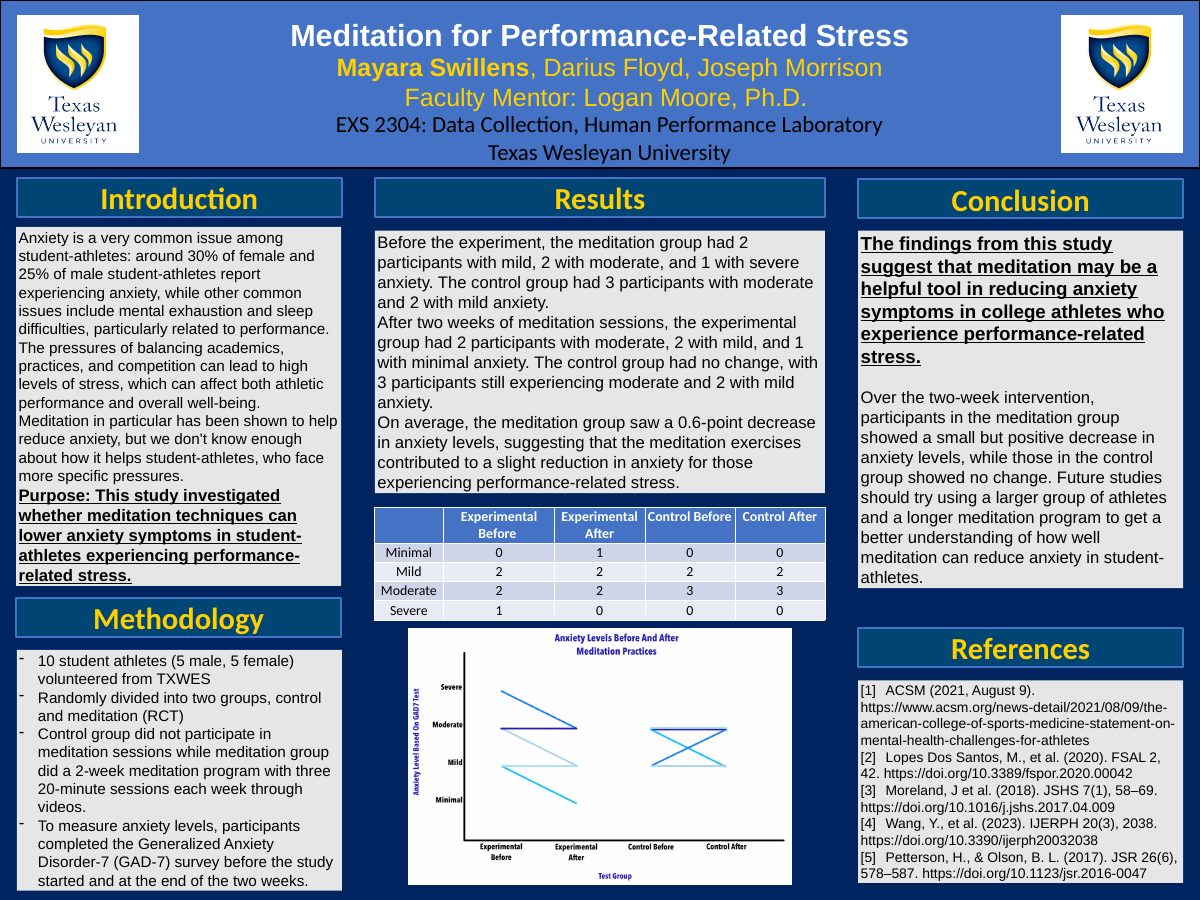
Poster: Meditation for performance-related stressOpen PDF
Sport psychology · RCT

Meditation for Performance-Related Stress

Mayara Swillens, Darius Floyd, Joseph Morrison

Finding: After two weeks of guided meditation, GAD-7 anxiety fell slightly (0.6 points on average), while the control group showed no change.

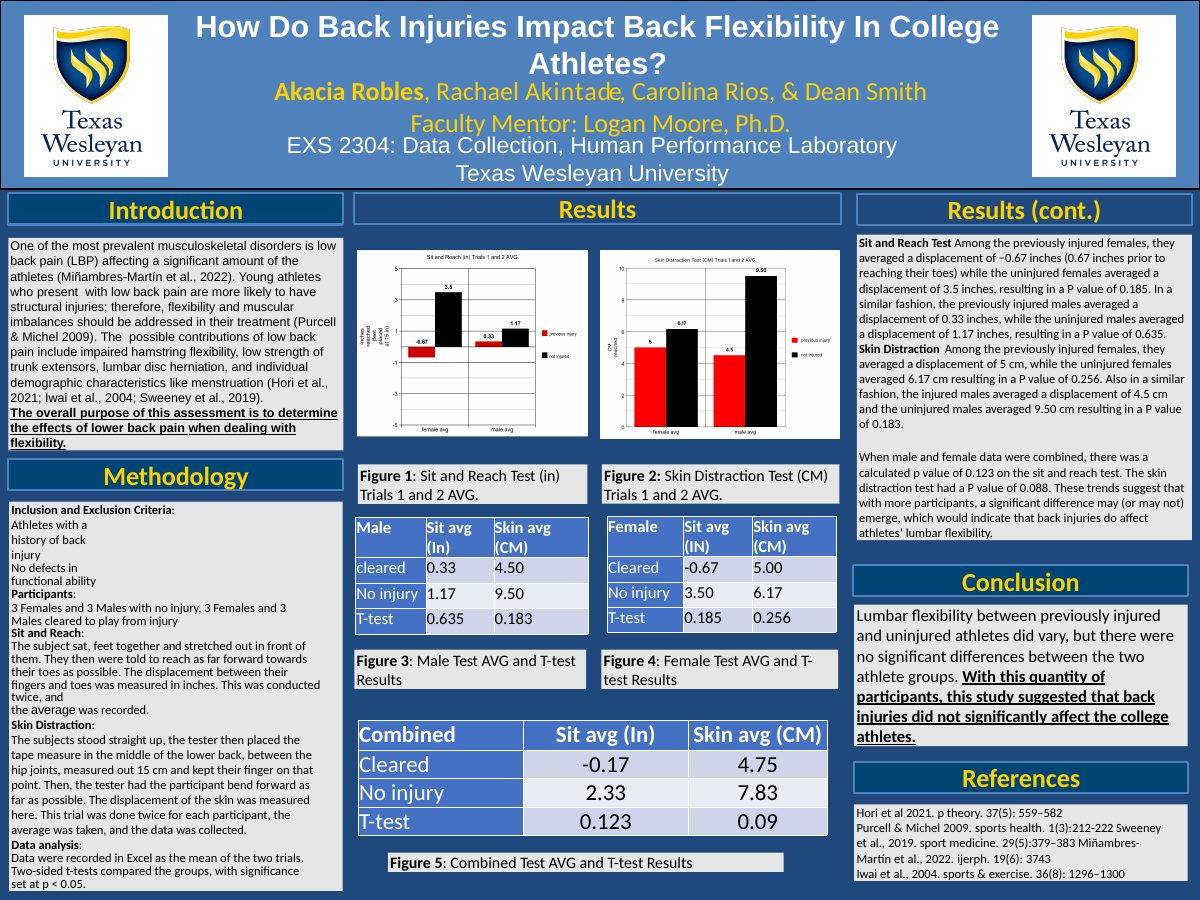
Poster: How do back injuries impact back flexibility in college athletes?Open PDF
Injury · Flexibility testing

How Do Back Injuries Impact Back Flexibility?

Akacia Robles, Rachael Akintade, Carolina Rios, Dean Smith

Finding: Previously injured athletes trended toward less lumbar flexibility on sit-and-reach and skin distraction tests, but the differences were not significant (n = 12).

Students in the Community

Students take what they learn out of the lab and use it with real clients.

EXS 3323 · Service learning

Senior Fitness & Assessment Clinic

Students run fitness assessments and write exercise prescriptions for adults over 65 through a partnership with the North Richland Hills Senior Center. The clinic was first held in April 2026 and is supported by a Title III Service Learning Grant.

Read about the research →
Occupational health · Sam Taylor Fellowship

Fitness Readiness for Future First Responders

Most criminal justice students in the pilot could not pass all four physical events required for law enforcement academy entry. A fitness course now follows each cohort as it trains to close that gap. Results from cohort 1 were presented at Texas ACSM 2026, and cohort 2 is in progress.

Read about the research →

Bring this to your program

Course-based research, data-collection labs, competition prep and service learning, built for undergraduates.

Work with M³ →